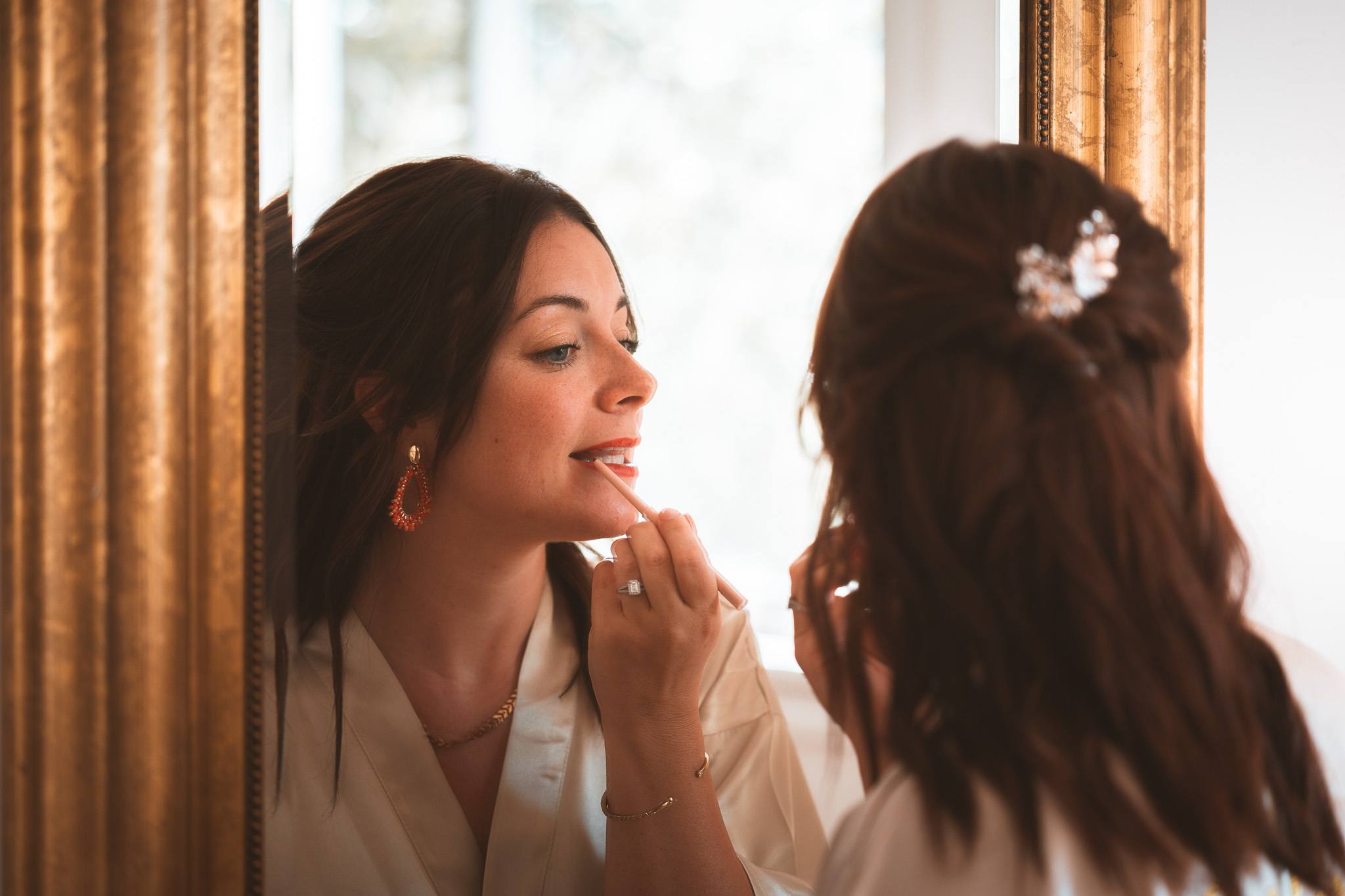
The right amount of coverage starts with the moments you want to remember, rather than a list of everything a wedding could include.
Before discussing hours, I ask what matters to you: getting ready with your closest people, arriving at the ceremony, catching up over drinks, the dinner or the energy of the party. Those priorities give the story a direction. They also help keep the day enjoyable, without moving constantly from one photograph to the next.
A shorter coverage, several connected parts of the day and a story that continues into the evening do different things. None is automatically better. What matters is that the agreed hours fit your actual schedule.
Start with the moments that matter
I suggest separating the essential moments from those you would enjoy including if time allows. If the ceremony and your guests are the heart of your day, we start there. If getting ready matters particularly to you, we look at its timing and the distance to the ceremony.
Shorter coverage might focus on the ceremony, portraits and the gathering afterwards. That means consciously leaving other parts outside the story. This is not an additional collection being advertised here: feasibility and scope need to be discussed for your plans.
More time can connect more moments, without filling every hour with portraits. Waiting, travelling and moving between spaces are also part of the time on the day.
What 7–8 hours can tell
At Wild Wedding House, the L’Histoire collection starts at €1,490 for approximately 7–8 hours. We build a schedule together. Depending on your timings, that can include part of the preparations, the ceremony, couple and group portraits, drinks and possibly part of the reception.
It is not a promise to cover every stage through the first dance. A later ceremony, a longer journey or a dinner that starts late changes what fits into the same amount of time.
Two illustrative schedules
For example, 1 pm to 8 pm: part of the preparations, a ceremony around 3 pm, the gathering afterwards, some group and couple photographs, followed by drinks. If dinner starts after 8 pm, it falls outside those seven hours.
For example, 3 pm to 11 pm: a ceremony around 4 pm, time with guests, portraits, drinks and the beginning of the reception. Morning preparations are outside the coverage. A first dance after 11 pm is not included in those eight hours.
These examples are starting points for a conversation, not a schedule to impose. They assume manageable travel and cannot guarantee the actual timing of events. We adapt the choices to your day and agree the scope in advance.
Allow for the journeys between moments
Moving between a house, a ceremony and a reception takes time, even when the distances look short on a map. Leaving one place, parking and reaching people at the next all count. I prefer to consider those transitions before placing portraits in a gap that exists only on paper.
In Camargue and Provence, the setting and light influence the pace. That does not mean taking a long detour or always waiting for sunset. A nearby spot may leave more time with your guests. My article on light and places in Camargue explores this approach to preparing photographs.
Leave a little room for portraits
Couple photographs should not become a second programme. We look for a moment that fits the ceremony, drinks and available light. Identifying the group photographs that matter in advance also helps avoid a long, improvised list.
If this part worries you, read my thoughts on natural photographs without knowing how to pose. A few simple suggestions can help without taking you away from your guests for a long stretch. The time needed depends on the setting, rather than a rule for every couple.
Look at a story, then talk about yours
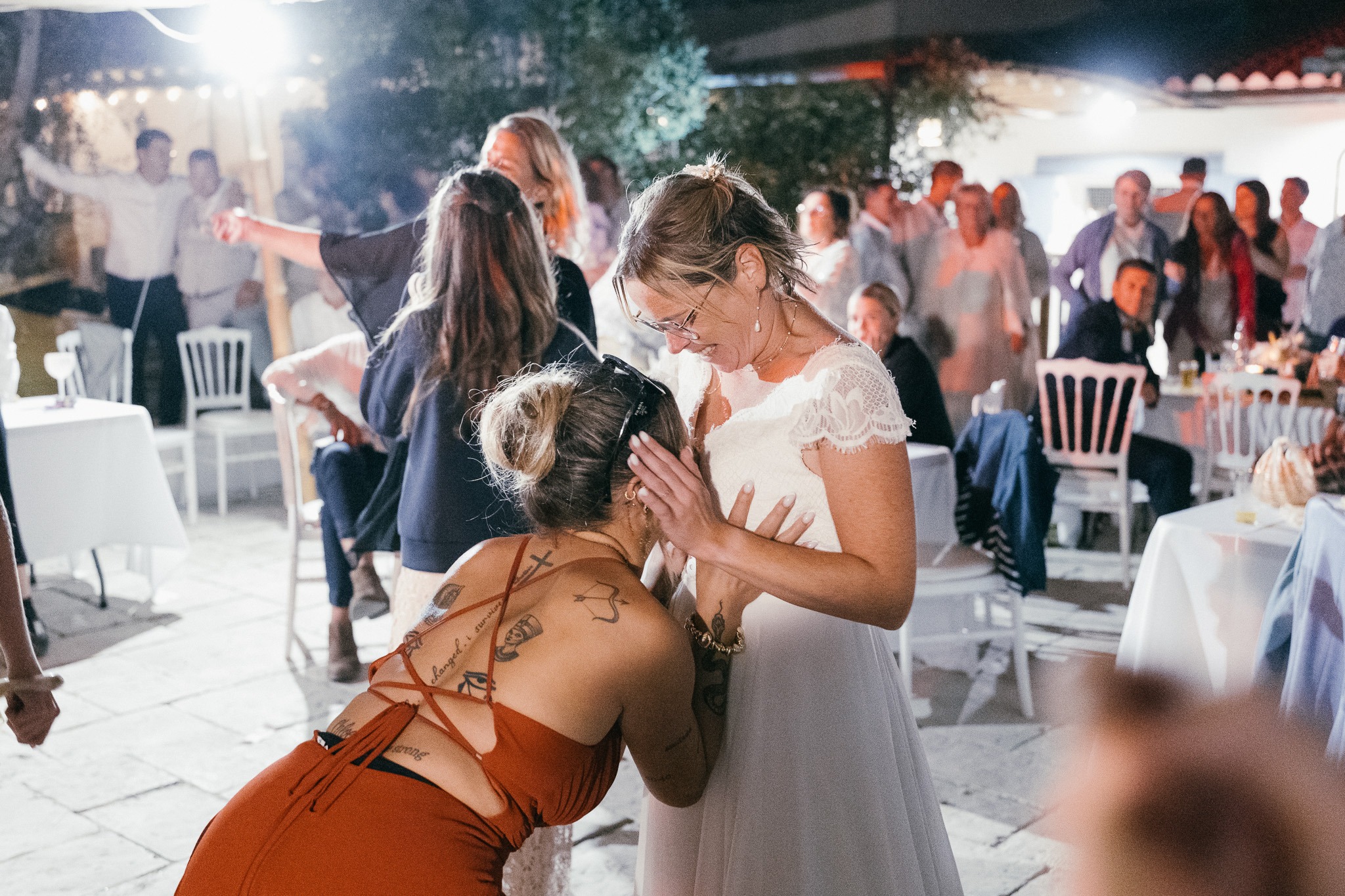
From preparations to the party brings together different energies: a gesture while getting ready, confetti, a walk together and conversations during the reception. It illustrates a photographic story, not the guaranteed contents of seven or eight hours of coverage.
Send me the timings you know, the locations and the moments you want to prioritise. Some details may still be open; we can start with what you have. I will help you define coverage that makes sense for your day, then set it out in the proposal.